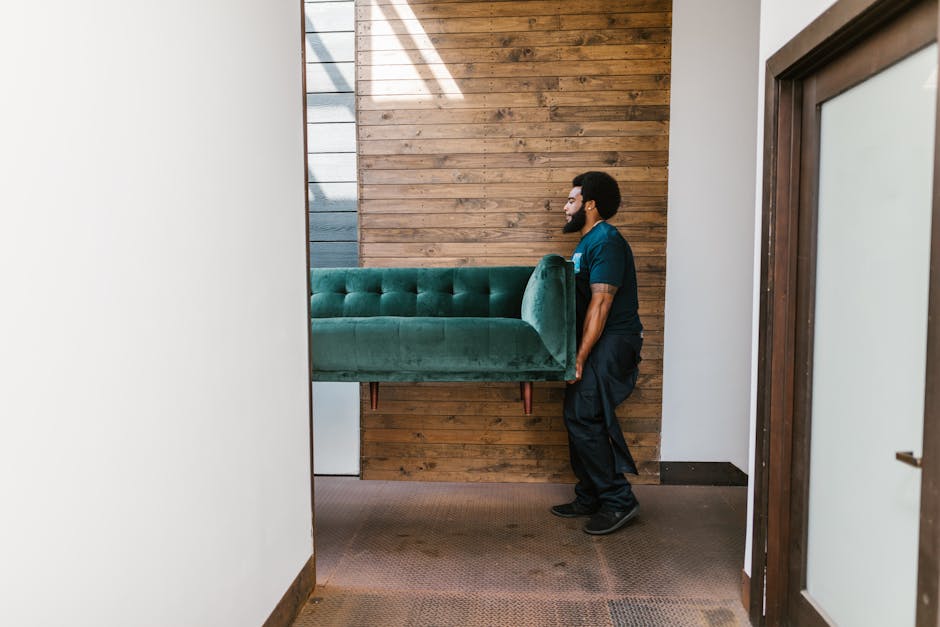
Green Street removals tips for tight halls and lifts
If you are moving in or around Green Street, you already know the problem: the hallway looks fine until a sofa appears, the lift seems generous until you try to fit a mattress, and suddenly everything feels three inches too wide. These Green Street removals tips for tight halls and lifts are designed for exactly that kind of move. Whether you are in a compact flat, a converted house, or a busy building with shared access, the goal is the same: move safely, avoid damage, and keep stress under control.
Truth be told, tight access changes everything. It affects how you pack, what size van you need, how many people should help, and even what order items should leave the property. In this guide, you will get a practical, step-by-step approach that covers planning, measuring, lifting, protecting walls, communicating with neighbours, and knowing when to call in a man with van service or a full removal service. If you want fewer scrapes, fewer delays, and fewer last-minute dramas, you are in the right place.
Table of Contents
- Why Green Street removals tips for tight halls and lifts Matters
- How Green Street removals tips for tight halls and lifts Works
- Key Benefits and Practical Advantages
- Who This Is For and When It Makes Sense
- Step-by-Step Guidance
- Expert Tips for Better Results
- Common Mistakes to Avoid
- Tools, Resources and Recommendations
- Law, Compliance, Standards, or Best Practice
- Options, Methods, or Comparison Table
- Case Study or Real-World Example
- Practical Checklist
- Conclusion
- Frequently Asked Questions
Why Green Street removals tips for tight halls and lifts Matters
Tight halls and small lifts are not minor inconveniences; they are the kind of access issue that can make an otherwise simple move turn messy fast. A chest of drawers can snag on a stairwell corner. A fridge can block a landing. One awkward turn in a narrow corridor can leave scuffed paint, dented plaster, or worse, a dropped item. And if a lift is shared, every minute you spend blocking it can also become a problem for neighbours and building management.
That is why a move in Green Street needs more than enthusiasm and a few strong arms. It needs planning. In our experience, the best removals are the ones where someone has looked at the access properly beforehand, measured the large items, and thought about the route from front door to van before anyone starts lifting.
There is also a comfort factor. When people feel rushed in a cramped hallway, they grip too hard, twist awkwardly, and make poor decisions. A calm plan does more than save furniture. It protects backs, nerves, and relationships with the building manager. That matters more than most people think, especially in flats where access is shared and space is limited.
If your move involves a smaller property, it may be worth reviewing the details of flat removals and, for larger home moves, the broader approach used in home moves. The principle is the same: access dictates method.
How Green Street removals tips for tight halls and lifts Works
The practical method is simple, but it has to be done properly. First, you assess the route. Then you plan the order of loading, packing, and lifting. After that, you choose the right equipment and people for the job. It sounds obvious. It rarely is in the real world.
A tight hallway move usually works best when the largest items are moved first and the route is cleared completely before lifting begins. If there is a lift, you check whether it is actually usable for your largest items, not just whether it is available. A lift that takes two people and a couple of boxes may still be useless for a wardrobe once you factor in width, angle, handrails, doors, and the item's awkward shape. A lift can lie to you. Well, not literally, but you get the idea.
The route outside matters too. If the van cannot park close enough, every extra metre becomes another lift, another risk, and another delay. This is why a well-planned move often involves choosing the right vehicle size, the right crew, and sometimes a phased move rather than trying to do everything in one exhausting push. For some jobs, a smaller vehicle and a careful loading sequence are better than forcing everything into the wrong setup.
If the move is especially tight, a service like man and van can be a good match for lighter loads, while bigger or more delicate moves may justify a more complete setup through removals or a larger moving truck. The right fit depends on the building, the furniture, and honestly, how much patience everyone has left by lunchtime.
Key Benefits and Practical Advantages
Good planning for tight halls and lifts gives you more than a smooth move. It changes the whole experience.
- Less risk of damage: wall corners, bannisters, lift doors, and furniture edges stay better protected.
- Faster loading and unloading: when the route is clear and the sequence is planned, each trip is more efficient.
- Lower physical strain: fewer awkward turns and fewer heavy repositions mean less stress on backs and shoulders.
- Better neighbour relations: shorter lift blockages and less corridor congestion keep things civil.
- More predictable costs: fewer delays usually means fewer unexpected extras.
- Less emotional overload: moving day already has enough going on. A clear plan helps.
One of the less obvious benefits is decision quality. When access is tight, people often overestimate what will fit and underestimate the time needed. A more careful approach gives you realistic expectations. That alone can save the day.
For people comparing services, it can also help to look at the broader differences between removal van options and larger-scale help from removal companies. The smallest practical solution is often the smartest one, not the biggest.
Who This Is For and When It Makes Sense
This advice is for anyone moving through a building where space is at a premium. That includes top-floor flats, maisonettes, converted terraces, student housing, office suites with narrow access, and older properties where stairwells seem to have been designed for a different century.
It is especially useful if you are moving:
- a sofa, wardrobe, bed frame, or fridge through a narrow corridor
- into or out of a property with a small lift
- from a flat where parking is awkward or restricted
- with only a few helpers and limited time
- on a same-day deadline
- with fragile items that cannot be knocked around
It also makes sense for people who are not sure whether they need full removals or a lighter service. If your move is mostly boxes, a small furniture set, and a straightforward route, you may only need a tailored option. If your access is particularly awkward, though, a more structured plan is wise. Students, for example, often benefit from streamlined support such as student removals, while businesses dealing with tight access and furniture in lifts may need office removals or broader commercial moves.
And if you are moving only a few key pieces, such as a single table or sofa, furniture removals or even furniture pick up can be enough. The key is matching the method to the access, not the other way round.
Step-by-Step Guidance
1. Measure the route, not just the furniture
People often measure the sofa and forget the doorway, the hallway bend, the lift interior, and the landing. Measure everything. Door width, corridor width, ceiling height where items may need to tilt, stair turns, lift opening width, and the space on both sides of the route. If a wardrobe fits in theory but needs a precise diagonal angle, that is not the same as a comfortable fit.
2. Check the lift properly
Look at the internal width, depth, and door opening. If the lift has mirrors, handrails, or low clearance, those details matter. Also ask whether the lift is booked for exclusive use, because shared lifts can interrupt the move and create a bit of chaos when residents are trying to get to work or bring shopping in. Not ideal at all.
3. Clear the hallway before anything is lifted
Hallways should be stripped back to the essentials. Remove mats, bikes, shoe racks, umbrella stands, small tables, wall hooks if necessary, and anything that might catch. A narrow corridor becomes much harder when it is full of everyday clutter. That extra clutter always looks harmless until you are carrying a mattress.
4. Protect the building before the first box moves
Use blankets, corner guards, and floor coverings where appropriate. This is not overcautious; it is sensible. One scraped wall or chipped stair edge can sour an otherwise smooth move. Many movers use protective wraps for furniture, but the building itself deserves protection too.
5. Pack for shape, not just weight
In a tight access move, the shape of a box can matter more than the weight. Long, awkward boxes can block a turning point; overfilled boxes can split at the worst moment; and mixed loads make carrying less stable. Keep heavy items in smaller boxes, and make sure awkward pieces are grouped logically. Packing and boxes support can make a huge difference here, especially if you are juggling work, children, or a deadline.
6. Decide which items go first
Load the most difficult items while everyone is still fresh. That usually means beds, sofas, wardrobes, appliances, and large shelving. Light boxes can follow after the route is working smoothly. If your lift is tiny, you may need to move flat-pack pieces and boxes first just to make room. It is a bit of a shuffle, but a smart one.
7. Use the right number of people
Two people can handle plenty of moves, but tight halls often benefit from a third person acting as guide, spotter, and door-holder. That extra pair of eyes helps prevent wall scrapes and bad angles. It also means the carriers do not have to keep stopping to make judgment calls.
8. Test the route with a lighter item
Before moving the biggest piece, send a box or smaller item through the route. If you spot a snag point, you can adjust before the heavy stuff arrives. This is one of those annoyingly simple tricks that saves a lot of trouble.
9. Keep communication clear and short
When you are squeezing through a narrow stairwell, nobody wants a speech. Use short calls: "pause," "lift," "turn," "down a touch." The calmer and clearer the communication, the safer the move. It does not have to be fancy. Just consistent.
Expert Tips for Better Results
Here are the little things that tend to make the biggest difference in tight-access removals.
- Remove doors if needed: sometimes taking a door off its hinges creates the extra centimetres that make a move possible.
- Wrap corners and handles: sharp edges catch fabric, paint, and fingers. Protect them early.
- Use a furniture strap: straps help stabilise loads and reduce wobble in narrow spaces.
- Think in angles: furniture often fits only when rotated. A flat "yes/no" fit test is not enough.
- Watch the lift threshold: a small lip at the lift entrance can become surprisingly annoying with a heavy trolley.
- Keep a spare plan: if the lift fails or becomes unusable, know the stair route and the fallback sequence.
- Move in daylight where possible: you can see corners, labels, and trip hazards much better.
A small but useful habit is to photograph awkward items and measure them against door frames or lift openings before moving day. That sounds a little fussy, perhaps, but it often prevents a painful surprise. And let's face it, no one enjoys discovering that the sofa is 2 cm too wide after the van is already outside.
If you are moving a specialist item, be even more careful. Delicate pieces such as instruments or oversized furniture may need more tailored handling, and in some cases a dedicated service like piano removals is the safer route.
Common Mistakes to Avoid
Most access problems are caused by a handful of predictable mistakes. Avoid these and your move becomes much easier.
- Assuming the lift will be enough: many lifts are smaller than they appear. Check properly.
- Ignoring the turning radius: the corridor may be wide enough, but the corner may not.
- Overpacking boxes: heavy boxes become unsafe quickly in tight spaces.
- Leaving furniture assembled: sometimes disassembly is the difference between a clean move and a blocked stairwell.
- Starting without a route plan: people can end up carrying items back and forth more times than necessary.
- Forgetting building rules: lift booking windows and moving hours matter.
- Not protecting walls and floors: scuffs are easy to create and annoying to repair.
Another common issue is underestimating the emotional side of the move. Tight spaces can make everyone tense. If you feel the pace tightening, pause. Reset. Take a breath. A slightly slower move is usually better than a rushed one with broken corners and raised voices. Nobody needs that energy on a Tuesday morning.
Tools, Resources and Recommendations
You do not need a warehouse full of gear, but the right basics matter a lot.
| Item | Why it helps | Best use |
|---|---|---|
| Measuring tape | Confirms routes, furniture dimensions, and lift clearances | Before move day and again before lifting large items |
| Furniture blankets | Protects furniture and walls from knocks | Wrapped around larger items and corridor pinch points |
| Removal straps | Improves grip and control | Carrying bulky items through narrow halls |
| Floor protection | Reduces scuffs and dirt transfer | Entrances, hallways, and lift thresholds |
| Door wedge or stopper | Keeps doors open safely while carrying | Flat moves where hands are already full |
| Labels and markers | Speeds up sorting and reduces backtracking | Room-by-room packing and staging |
For larger moves, it may be worth pairing the right equipment with a service that can adapt to the building. Some people only need a van and a capable pair of hands, while others need a more organised service with packing support. If you want help beyond transport, the combined approach of packing and unpacking services can save a surprising amount of time, especially when access is awkward.
Where storage is needed between properties, or if your completion date and move-in date do not quite line up, storage may be the sensible pressure release valve. It is not exciting, but it can be very useful.
Law, Compliance, Standards, or Best Practice
For most household moves, the key thing is not some dramatic legal hurdle. It is practical compliance with building rules, safety expectations, and general duty of care. In the UK, movers should take reasonable steps to avoid injury and damage. That means lifting safely, not blocking shared areas for longer than necessary, and respecting the property and the building's access arrangements.
Many flats and managed buildings have their own moving policies. These may cover lift bookings, preferred move times, floor protection, loading bay use, and noise management. It is worth checking those arrangements in advance rather than assuming you can simply turn up and start. A quick call to the managing agent or building porter can spare a lot of back-and-forth later.
Insurance also matters. If someone is moving items through a tight corridor, the chance of a scrape or mishap rises. A responsible operator should be able to discuss cover and handling practice in plain English. If you want to understand that side in more detail, insurance and safety is a useful place to review the basics, while the company's health and safety policy should explain how risk is managed in everyday work.
It is also sensible to review payment, terms, and privacy details before booking, particularly if you are coordinating a move with access restrictions and a tight timetable. For that, the pages on payment and security, terms and conditions, and privacy policy can help set clear expectations. Nothing glamorous there, but it is part of a trustworthy moving process.
Options, Methods, or Comparison Table
There is no single right way to tackle a tight-hall, small-lift move. The best method depends on the volume, the access, and how much furniture needs to be manoeuvred.
| Method | Best for | Pros | Limits |
|---|---|---|---|
| DIY with helpers | Small moves, a few boxes, light furniture | Low cost, flexible timing | Higher physical effort, more risk in tight spaces |
| Man and van | Medium-small moves, quick turnaround, lighter loads | Practical, efficient, often simpler to coordinate | May not suit bulky or highly complex access |
| Full removals support | Larger homes, awkward furniture, sensitive items | More structured, better for complex access | Usually more involved than a simple van hire |
| Storage-plus-move plan | Timing gaps or phased moves | Reduces pressure on move day | Needs extra planning |
If the property access is tricky but the load is modest, a tailored option like man with van can be a good middle ground. For more demanding house moves, it may be worth considering house removals or even support from house removalists. The right choice is the one that fits both the building and your nerves, to be fair.
Case Study or Real-World Example
A typical Green Street scenario might look like this: a two-bedroom flat on an upper floor, a narrow communal hallway, and a lift that is fine for people but awkward for furniture. The move starts with boxes, but a sofa and wardrobe still need to come down. The residents' lift is shared, so timing matters.
The successful version usually follows a simple pattern. The team measures the sofa and wardrobe in advance, checks the lift opening, books a moving window, and clears the hallway fully. The wardrobe is partly dismantled because the assembled version would have been too tight. The sofa is wrapped and carried with a guide at the front to watch the corner. A door is wedged open for the exit route. The lift is used only when it is free. Nothing dramatic. Just steady, practical work.
What tends to go wrong in the less successful version? Someone assumes the sofa will "probably fit," the lift is left untested, boxes are overfilled, and the corridor becomes cluttered with shoes, bags, and forgotten bits of packaging. Then every turn takes twice as long. You can almost hear the sighs. Not ideal.
That is why careful access planning often matters more than brute strength. In many cases, a well-planned move with the right-sized vehicle and support from removal van or a more complete moving setup performs better than a bigger, more chaotic approach.
Practical Checklist
Use this checklist before moving day. It is simple, but it covers the bits people forget.
- Measure all large items and all access points
- Check lift size, lift booking rules, and any time restrictions
- Clear hallways, stairs, and entry routes
- Protect floors, corners, and door frames
- Dismantle oversized furniture where possible
- Pack heavy items into smaller boxes
- Label boxes by room and priority
- Plan the order of loading and unloading
- Confirm parking and unloading access for the vehicle
- Keep tools, tape, and spare covers within reach
- Notify neighbours or building management if needed
- Check insurance and safety arrangements before the move
- Prepare a backup plan if the lift is unavailable
And one more thing: keep a bottle of water nearby. Sounds minor, but on a long move day, especially in warmer weather or a stuffy stairwell, it helps more than you expect.
Conclusion
Green Street removals tips for tight halls and lifts come down to one simple principle: respect the access, and the move becomes much easier. Measure properly, pack intelligently, protect the building, and choose the right level of help for the job. That approach saves time, reduces stress, and makes the whole day feel more manageable.
If you are moving from a flat, handling awkward furniture, or trying to work around a small lift, do not leave it to guesswork. A little planning goes a long way, and honestly, a careful move often feels more efficient than a hurried one. The difference is usually in the details nobody sees at first glance.
Get a free quote today and see how much you can save.
When the boxes are stacked and the hallway is clear again, the relief is real. That quiet moment at the end? Worth the effort.
Frequently Asked Questions
How do I know if my sofa will fit through a tight hallway?
Measure the sofa at its widest points, then measure the hallway width, corners, and any doors along the route. Remember that turning space matters as much as straight-line width. If the sofa only fits at a very precise angle, treat that as a warning sign and plan carefully.
What should I measure before moving in a flat with a small lift?
Measure the lift interior width, depth, door opening, and any threshold lip. Also measure the largest furniture pieces and the access route from the flat to the lift. A lift that fits boxes may still not fit a wardrobe or sofa in a usable position.
Should I dismantle furniture before moving through tight halls?
Yes, if dismantling makes the item safer or easier to manoeuvre. Beds, wardrobes, tables, and shelving often become much more manageable once partly taken apart. Keep screws and fittings in labelled bags so reassembly is not a nightmare later.
Is a man and van service enough for a narrow-access move?
It can be, if the load is modest and the access route is manageable. For heavier, larger, or more complex moves, you may need a fuller removals setup. The best option depends on the furniture size, the lift, and how much handling is involved.
How can I protect walls and bannisters during a move?
Use blankets, corner guards, and careful route planning. Keep one person spotting tight turns if possible. The most common scrapes happen at corners, door frames, and stair landings, so those are the areas to protect first.
What is the biggest mistake people make in tight-hall removals?
Assuming the item will "probably fit" and then trying to force it through. That usually leads to damage or unnecessary stress. Measure first, plan the route, and be willing to dismantle or change the moving order if needed.
Do I need to tell the building management before moving day?
In many buildings, yes. Some flats and managed properties have lift booking rules, move time windows, or loading instructions. Checking in advance is a good habit and can prevent avoidable delays.
What if the lift breaks or becomes unavailable on the day?
Have a backup plan ready. That might mean using the stairs, changing the load order, or moving smaller items first while waiting for an update. If access is critical, it is smart to plan as though the lift may not be usable the whole time.
Are there special safety concerns with moving large items in small spaces?
Yes. Narrow halls increase the risk of back strain, pinched fingers, dropped items, and accidental wall damage. Use proper lifting technique, enough people, and the right equipment. If an item feels unstable, stop and reset rather than forcing it.
Can storage help if my new place has difficult access?
Absolutely. If you cannot move everything in one go, or if your completion and move-in dates do not line up neatly, storage can take pressure off the day. It is especially useful when you need to phase the move item by item.
How do I make a tight lift move quicker?
Keep the route clear, pack efficiently, and move the largest items first while the crew is fresh. A spotter can help prevent delays at corners and lift entrances. Good preparation is what really speeds things up.
What kind of move is best for students in older buildings?
Student moves often work well with a smaller, flexible approach, especially where stairwells are narrow and furniture is limited. A streamlined service can be a sensible choice when you only have a few larger pieces and a lot of boxes.
How can I get an accurate price for a tight-access move?
Be honest about the access. Mention stairs, lift size, parking limits, furniture dimensions, and any dismantling needed. The more accurate the information, the more reliable the quote will be. That is especially important for awkward flats and compact buildings.
What should I do if I am moving heavy or unusual items like a piano?
Do not treat them like ordinary furniture. Heavy or specialist items need different handling, and sometimes a dedicated service is safer. If in doubt, ask for tailored advice before moving day rather than improvising under pressure.